Celebrating Black History Month with the Emerald Necklace Conservancy
At the Emerald Necklace Conservancy, our mission is to restore and improve the Emerald Necklace for all— and where access to nature is not a privilege, but a shared right. Black History Month is an opportunity to recognize and honor the profound contributions Black leaders, advocates, and communities have made to environmental stewardship, environmental justice, and the protection of public lands. It is also a time to reflect on the ongoing work required to ensure that our parks and green spaces are equitable, welcoming, and shaped by the communities who rely on them.
Too often, the contributions of Black environmentalists and deep, historic relationships between Black communities and land are overlooked or erased. Leaders such as Dr. Robert D. Bullard—widely recognized as the father of the environmental justice movement—have challenged environmental racism and advanced the fight for clean air, clean water, and safe, healthy neighborhoods for all people.
Environmental justice is inseparable from park equity. Access to safe, well-maintained green space supports public health, strengthens community resilience, and fosters belonging. Black communities must not only have equitable access to parks, but also shared stewardship in shaping these public landscapes.
We invite you to learn, reflect, and join us in advancing a more just and inclusive park system for all.
Featured Black environmental leaders:
In honor of Black History Month, we are highlighting influential Black environmental leaders across the United States, along with recommended books by Black authors that explore environmental justice, Black communities’ relationships to land and nature, and the fight for spatial equity.
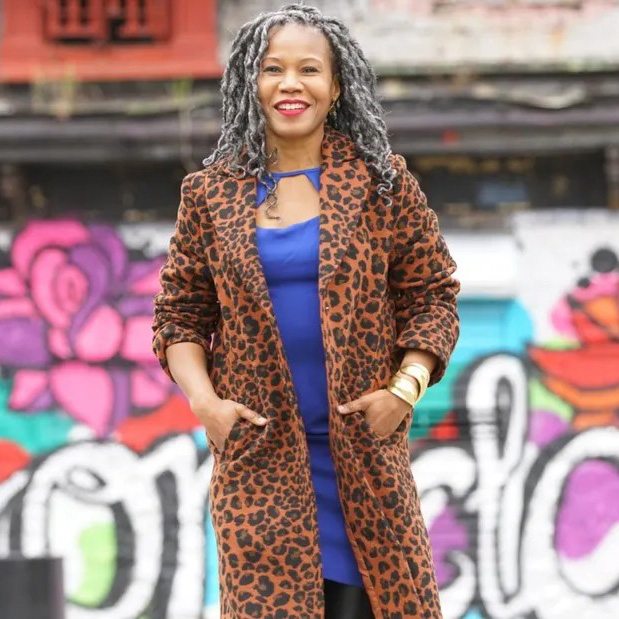
Majora Carter
Majora Carter is a real estate developer, urban revitalization strategy consultant, and public radio broadcaster. She led multiple major green infrastructure projects in the South Bronx and founded Sustainable South Bronx, an organization dedicated to helping transform disinvested urban communities through environmental justice advocacy, green job training, and community greening programs. With Van Jones, she also founded Green for All, which works to ensure that all communities benefit from renewable energy investments and jobs. She has received numerous honorary degrees and awards, including as a MacArthur Fellow. Carter now runs a private consulting firm that transforms disinvested communities into thriving mixed-use local economies.
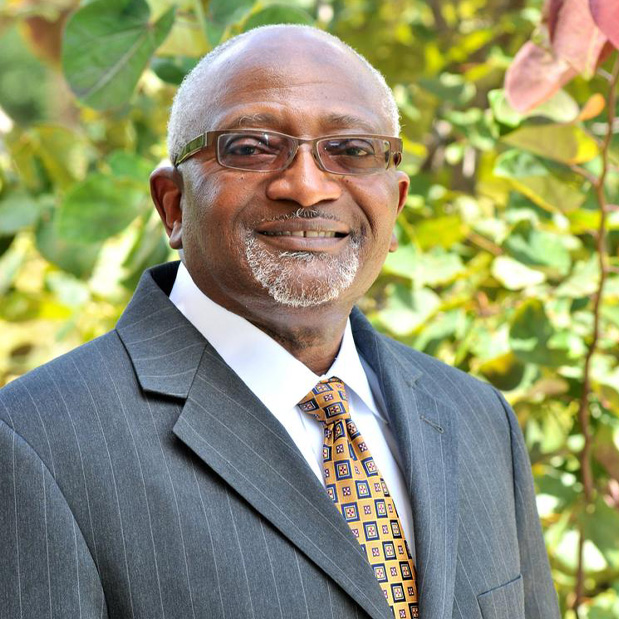
Dr. Robert D. Bullard
Dr. Robert D. Bullard is known as the Father of Environmental Justice, producing some of the earliest scholarship demonstrating how environmental hazards disproportionately impact communities of color and low-income communities. He has written eighteen books that address environmental racism, urban land use, industrial facility siting, housing, transportation, climate justice, disasters and emergency response, and community resilience. Dr. Bullard was at the First National People of Color Environmental Leadership Summit in 1991 which drafted and adopted 17 principles of environmental justice that continue to guide the movement today. He is the founding director of the Bullard Center for Environmental and Climate Justice and a distinguished Professor of Urban Planning and Environmental Policy at Texas Southern University. He also co-founded the HBCU Climate Change Consortium. Dr. Bullard has received numerous awards from prominent institutions around the world and in 2021, was named to the White House Environmental Justice Advisory Council.
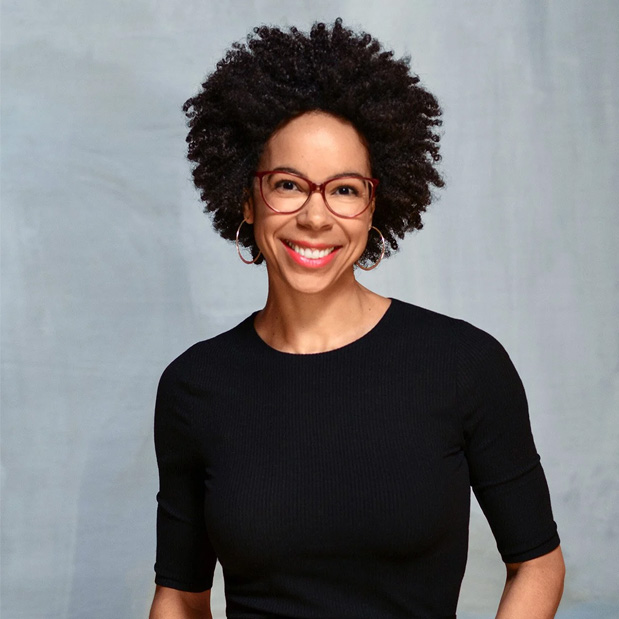
Dr. Ayana Elizabeth Johnson
Dr. Ayana Elizabeth Johnson is a writer, marine biologist, and policy expert, as well as the Roux Distinguished Scholar at Bowdoin College. She co-founded Urban Ocean Lab, a nonprofit think tank working to develop climate and ocean policy for coastal cities. Dr. Johnson co-edited the bestselling climate anthology All We Can Save and author of What If We Get it Right?: Visions of Climate Futures. She also co-authored a roadmap for how to include the ocean in climate policy called the Blue New Deal. Dr. Johnson serves on the board of directors for Patagonia and GreenWave. She is in love with climate solutions and is committed to helping people find their optimism and their place in moving us towards a better climate future.
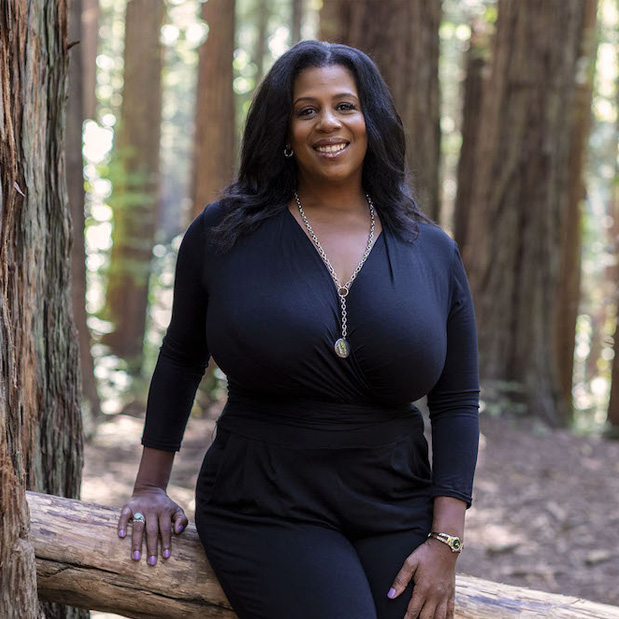
Rue Mapp
Rue Mapp is an author, speaker, outdoor gear designer, and founder of Outdoor Afro, a nonprofit that celebrates and inspires Black connections and leadership in nature through outdoor education, recreation, and conservation. She launched Outdoor Afro Inc., which designs culturally relevant outdoor apparel, and leads Black Heritage Hunt, which (re)introduces Black people to the cultural legacy of hunting and the delicious flavors of wild game. Mapp published Nature Swagger: Stories and Visions of Black Joy in the Outdoors in 2022 and her work has been featured in prominent outlets like NPR and the New York Times. She has received an array of recognitions, including as a National Geographic Fellow, California State Parks Commissioner, and the Heinz Award.
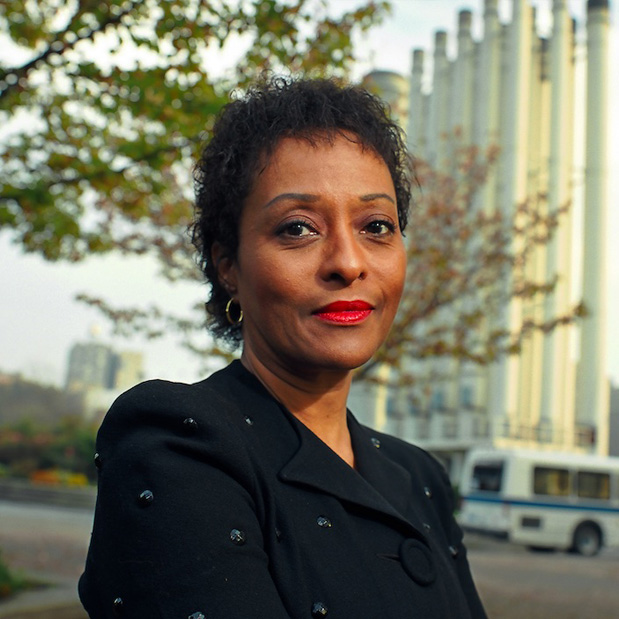
Peggy Shepard
Majora Carter is a real estate developer, urban revitalization strategy consultant, and public radio broadcaster. She led multiple major green infrastructure projects in the South Bronx and founded Sustainable South Bronx, an organization dedicated to helping transform disinvested urban communities through environmental justice advocacy, green job training, and community greening programs. With Van Jones, she also founded Green for All, which works to ensure that all communities benefit from renewable energy investments and jobs. She has received numerous honorary degrees and awards, including as a MacArthur Fellow. Carter now runs a private consulting firm that transforms disinvested communities into thriving mixed-use local economies.
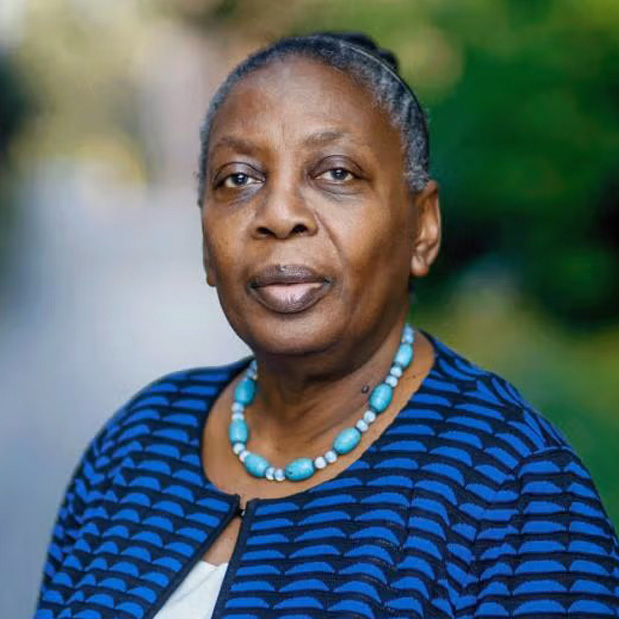
Dr. Dorceta Taylor
Dr. Dorceta Taylor is the Wangari Maathai Professor of Environmental Sociology at the Yale School for the Environment. She authored a landmark national report in 2014 “The State of Diversity in Environmental Institutions: Mainstream NGOs, Foundations, and Government Agencies” which revealed that these institutions continue to severely lack meaningful racial diversity in their staff, members, and volunteers. Dr. Taylor has published influential books on the ways race, class, and gender influenced the conservation movement and ideas; the impact of race and class on exposure to environmental hazards; and the history of urban environmental inequality and activism. She also leads the development of the Encyclopedia of People of Color Environmental Professionals. Dr. Taylor has received a number of prestigious awards, including from the Smithsonian Institution and the National Science Foundation.
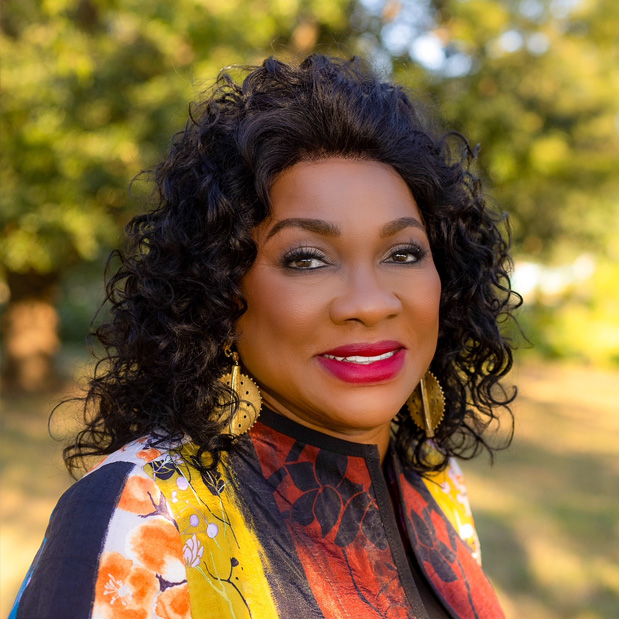
Dr. Beverly Wright
Dr. Beverly L. Wright is an award-winning environmental justice scholar, advocate, author, leader, and professor of Sociology. She also founded and leads the Deep South Center for Environmental Justice, the first environmental justice center in the United States. Dr. Wright has developed a model of community-centered research and policymaking, seeking to address environmental and health inequities across Louisiana. She also developed an environmental justice curriculum used in the New Orleans Public Schools system. Dr. Wright has authored important books and academic articles, received numerous prestigious awards, including an EPA Environmental Justice Achievement Award, and serves on many nonprofit and government boards and committees.
Black Faces, White Spaces: Reimagining the Relationship of African Americans to the Great Outdoors by Carolyn Finney
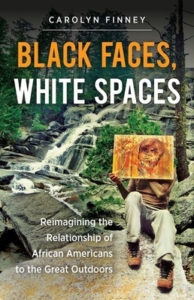 Dr. Carolyn Finney, a storyteller, author, and cultural geographer, examines how the legacies of slavery and Jim Crow have shaped understandings of “nature” and impacted who has access to these outdoor spaces. Finney’s writing crosses disciplines and uses a range of sources to show how the idea of the environment is racialized in the United States. Looking ahead, Finney highlights the work of African Americans who are making space for greater BIPOC participation in environmental and conservation conversations and spaces.
You can also check out the recording from Carolyn Finney’s talk at the Boston Public Library in 2022.
Black Earth Wisdom: Soulful Conversations with Black Environmentalists by Leah Penniman
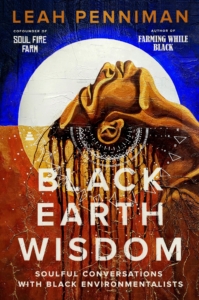 Lean Penniman is a Black Kreyol farmer/peyizan, mother, soil nerd, author, and food justice activist who co-founded Soul Fire Farm in Grafton, New York with the mission to end racism in the food system and reclaim ancestral connection to land. Black Earth Wisdom is a collection of essays and interviews with today’s most influential Black environmental voices. Penniman reminds us that ecological humility is an intrinsic part of Black cultural heritage. The experts in Black Earth Wisdom address the essential connection between nature and our survival and how runaway consumption and corporate insatiability are harming the earth and every facet of American society, engendering racial violence, food apartheid, and climate injustice.
Unequal Protection: Environmental Justice & Communities of Color by Robert D. Bullard
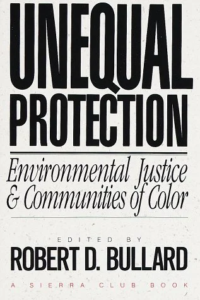 Edited by one of the founders of the environmental justice movement, Unequal Protection: Environmental Justice and Communities of Color was a groundbreaking book that offers evidence that communities of color are disproportionately impacted by pollution and experience the inconsistent application of environmental laws meant to protect communities. Bullard brings together writings from educators, activists, and journalists challenging environmental injustice across the United States, from Native American reservations to major cities.
The Environment and the People in American Cities, 1600s-1900s: Disorder, Inequality, and Social Change by Dorceta Taylor
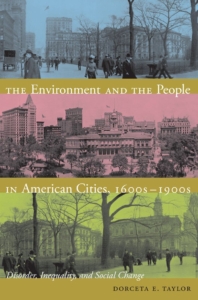 Dr. Dorceta Taylor provides an in-depth examination of the development of urban environments and urban environmentalism in the United States from the seventeenth through the twentieth century. While many accounts of environmental history begin and end with wildlife and wilderness, Taylor shows that the city offers important clues to understanding the evolution of American environmental activism. She traces the progression of multiple strands of urban environmental activism, including poverty alleviation, public health, affordable housing, parks and open space, and land use. She also presents a historical analysis of the ways race, class, and gender shaped experiences and perceptions of the environment as well as environmental activism and the construction of environmental discourses.
Race, Place, and Environmental Justice after Hurricane Katrina: Struggling to Reclaim, Rebuild, and Revitalize New Orleans and the Gulf Coast by Robert D. Bullard and Beverly Wright
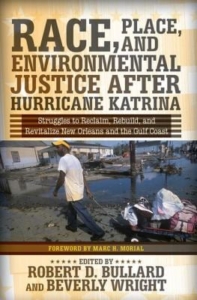 Racial disparities exist in disaster response, cleanup, rebuilding, reconstruction, and recovery. Race plays out in natural disaster survivors’ ability to rebuild, replace infrastructure, obtain loans, and locate temporary and permanent housing. Generally, low-income and people of color disaster victims spend more time in temporary housing, shelters, trailers, mobile homes, and hotels – and are more vulnerable to permanent displacement. Some ‘temporary’ homes have not proved to be that temporary. In exploring the geography of vulnerability, Dr. Robert D. Bullard and Dr. Beverly Wright ask why some communities get left behind economically, spatially, and physically before and after disasters strike.
